In home textiles, OEM usually starts with a buyer’s design or specification, while ODM starts with a supplier-developed design or product direction. Private label describes selling the approved product under your brand and can be part of either route. Confirm responsibilities in writing: the acronym alone does not settle ownership, exclusivity, price or timing.
For a retailer or importer, choosing between OEM and ODM is a development decision. The practical question is how much of the product brief already exists and what you need a manufacturing partner to develop.
What does OEM mean for home textiles?
OEM means original equipment manufacturer. In a buyer-led home textile project, you may provide artwork, dimensions, material references or a technical specification for the supplier to produce against. The brief could describe a decorative cushion collection, a woven throw or customized table linens.
A drawing is not a complete manufacturing specification. The buyer and supplier still need to confirm materials, construction, colors, measurement methods, sample approvals and packaging. Record which party is responsible for resolving each open detail before production begins.
What does ODM mean, and where does private label fit?
ODM means original design manufacturer. A project can begin with a design, construction or sample developed by the supplier, then proceed through agreed selections or adaptations. Ask which changes are available and which would require separate development.
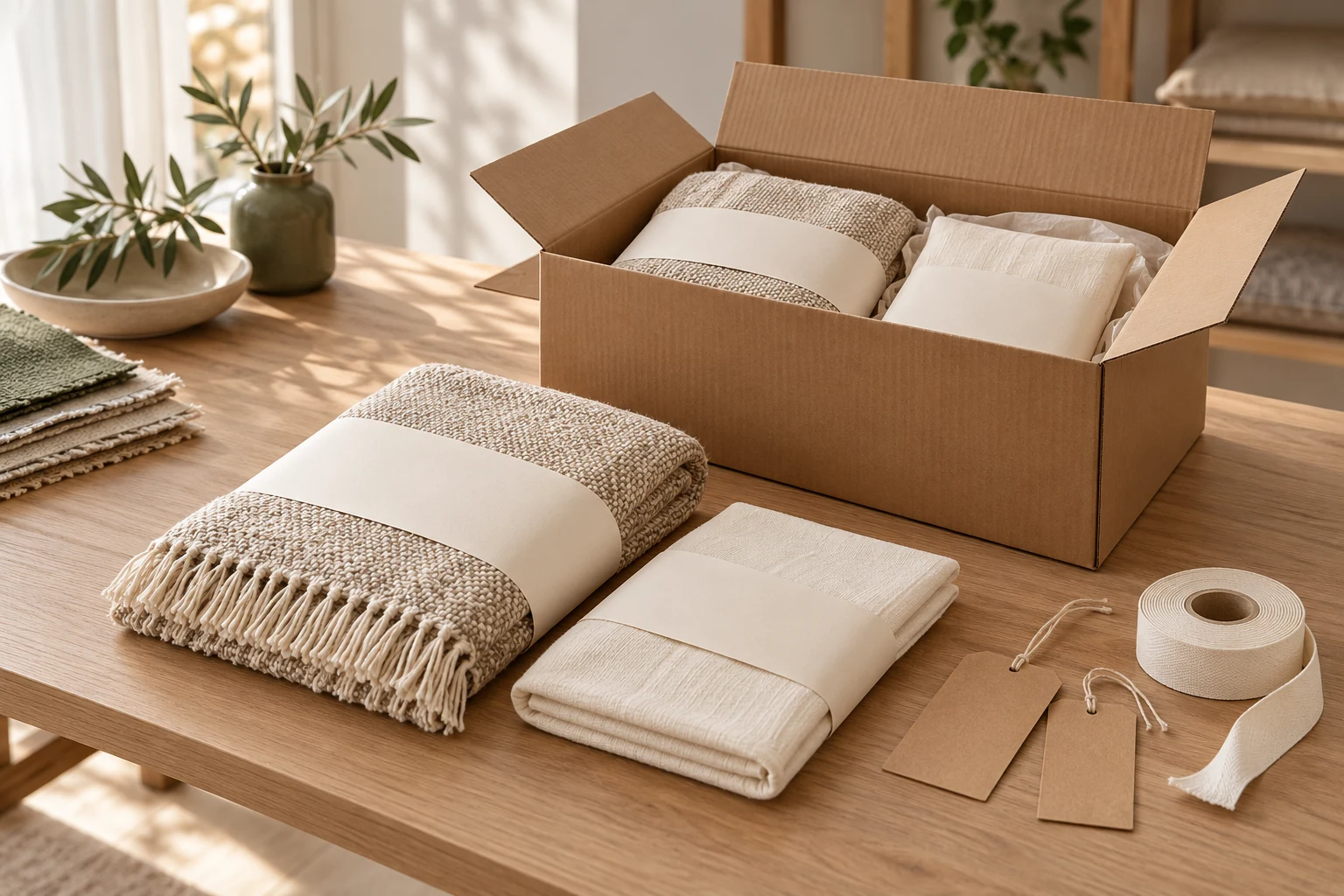
Private label describes brand presentation. It can include a woven label, hangtag, care label, paper band or retail package carrying the buyer’s identity. A private-label product might use a supplier-developed starting design or a buyer-led specification. Branding and product development are related decisions, but they are not the same decision.
OEM vs ODM: compare the work, not just the name
| Decision | Buyer-led OEM brief | Supplier-led ODM starting point |
|---|---|---|
| Starting reference | Your artwork, sample or specification | A supplier-developed design or product direction |
| Open development | Identify details the supplier must resolve | Confirm what can be selected, adapted or redeveloped |
| Sample approval | Check execution against the agreed brief | Check the selected design and agreed changes |
| Branding | Agree labels and packaging separately | Agree labels and packaging separately |
| Commercial terms | Confirm MOQ, charges, timing and rights in writing | Confirm MOQ, charges, timing and rights in writing |
Industry usage varies, and projects can combine elements of both routes. Describe the starting material and approval responsibilities when requesting a quotation instead of relying on the label “OEM” or “ODM” to communicate the full scope.
A practical example: developing a cushion collection
Imagine a homewares brand with an original floral drawing and a specific cushion construction. It could send an OEM brief defining the artwork, face and reverse fabrics, size and closure. The sample review would check how that design has been translated into the finished item.
Alternatively, the brand might start from a supplier’s existing textured cover, ask about a different color and request its own label and packaging. That is a supplier-led starting point with private-label requirements. In either hypothetical case, fabric availability, quantities and development work need confirmation. Neither route automatically gives the buyer a lower MOQ or an exclusive design.
Choose the route by answering five questions
- Design: do you have original artwork and a defined construction, or do you need starting options?
- Materials: which fabrics, colors and finishes are fixed, and where can the supplier recommend alternatives?
- Approval: who signs off swatches, samples, artwork and the assembled retail pack?
- Commercial scope: what quantities, development charges and schedule apply to the actual specification?
- Rights and repeat orders: what use of artwork, designs and approved references has been agreed?
Resolve ownership and exclusivity through the appropriate written agreement and review, rather than inferring them from a sourcing acronym. The same care applies when a supplier-developed base is modified for your brand.
Carry approvals through to labels and cartons
Once the product sample is approved, identify its revision and connect it to the correct label and packaging artwork. Define folding, units per pack, permitted SKU mixing and carton marking requirements. Approving a fabric sample does not automatically approve every brand label or pack-out decision.
Agree inspection stages and exception handling for the order. Keep any proposed substitution or change visible in the approval record. For product-specific details, use our wholesale cushion cover guide and throw blanket sourcing guide alongside your development brief.
Questions about OEM, ODM and private label
Is private label the same as OEM?
No. Private label describes the brand under which the product is sold. OEM describes a buyer-led manufacturing arrangement in this context. Your branding can be applied to an OEM project or a supplier-developed product, subject to the agreed product and commercial terms.
Does ODM always mean a faster launch?
No. An available starting design may reduce some development work, but materials, modifications, samples, testing, packaging and production scheduling still affect timing. Ask for the schedule for the particular item and quantity, including the approvals on which it depends.
Can I customize fabric, size and packaging?
Those are part of enjoyhomeware’s published customization scope. The feasible combination, quantities and development steps need to be confirmed for the specific item. Send the changes together so the supplier can evaluate the complete requirement rather than separate assumptions.
What information should I send to start?
Share the product category, design or reference, material direction, size, quantity by SKU, destination and branding needs. Mark open decisions clearly. Explore our home textile collections and OEM and ODM customization services, then send enjoyhomeware your development brief.