
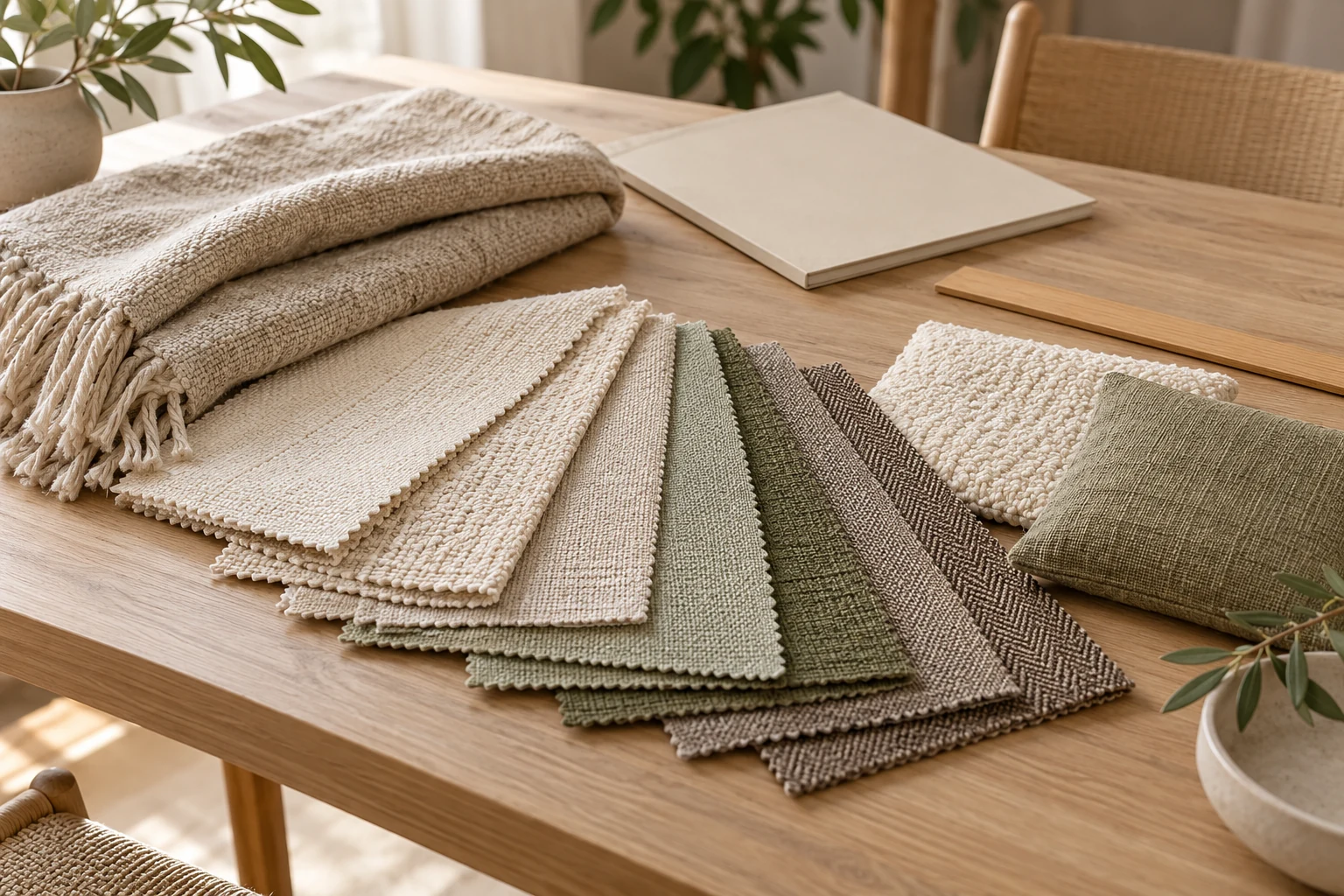
To choose a home textile manufacturer, compare evidence for your actual product: material and construction details, samples, quantity requirements, quality checks and the handoff into bulk production. Send the same brief to each supplier, then compare written responses and physical samples before comparing unit prices.
This guide is for importers, wholesalers and private-label brands evaluating a manufacturing partner for cushions, throws, curtains or related home textile collections. The goal is a supplier shortlist you can explain and verify, rather than a list of companies described as “the best.”
Match the manufacturer to your product and sourcing model
Begin with the item you plan to buy and the decisions you need help making. A decorative cushion program may involve face and reverse fabrics, closures, trims and inserts. A throw program raises different questions about body size, fringe, weight and drape. Ask for references relevant to that construction instead of evaluating an entire catalog as one capability.
Clarify who will develop the specification. If you supply artwork and a detailed technical brief, you need a partner who can interpret and produce it. If you need a supplier-developed starting design, ask what can be selected or adapted. Our OEM vs ODM home textile guide explains the responsibilities to define for each route.
Ask what is made, sourced and coordinated
Ask the supplier which stages it performs directly and which involve production partners. Identify who controls fabric sourcing, color approval, sewing, inspection and packing. A coordinated network and a single-site factory can have different operating structures; the useful question is who is accountable for each part of your order.
Request the legal business name, the relevant production location and the main order contact. Arrange an appropriate visit, video review or independent inspection where needed. A showroom photograph or certificate image alone does not establish the scope of production or the status of a specific order.
Use a sample to test the written specification
Choose a reference item and record its composition, finished size, construction and intended use. Ask the manufacturer to identify any proposed substitution before making the sample. For color or texture, keep an agreed physical reference rather than relying only on a screen image.
During review, measure the sample using an agreed method and check the details that affect your product: seams, closure operation, trim attachment, drape or insert fit. Identify any performance evidence you require and agree the test method and acceptance criteria. Do not treat a supplier’s unrelated test report as evidence for a different material or finished item.
Compare MOQ, timing and quote inclusions together
Give the quantity per design, color and size, not just the total volume. Ask whether minimum order quantities relate to the finished item, a fabric run, a color batch or customized packaging. The same headline quantity may represent very different order structures.
Separate sample development, approval, production and transport in the schedule. Ask which charges the quotation includes, including any sampling, artwork, labels, retail packaging or testing. Confirm the currency, delivery term, named place and quote validity. A proposed delivery date becomes useful only when both parties understand what has to be approved first.
Put sample approval and quality follow-up in writing
Ask how the approved sample is identified and how revisions are communicated to production. Agree when inspections will occur, what will be checked and who decides whether an exception requires rework or replacement. If your appointed inspection agency will be involved, resolve access and reporting arrangements early.
Include packaging in this review. Unit counts, SKU mixing, label artwork and carton marks should connect to the same product reference. Ask how repeat orders will refer back to the approved materials and previous decisions.
A supplier comparison sheet you can actually use
- Product fit: relevant constructions and a named reference item.
- Production responsibility: direct operations, partner stages and accountable contact.
- Sample evidence: approved version, open changes and required test evidence.
- Order scope: quantity split, confirmed MOQ and packaging.
- Commercial comparison: inclusions, exclusions, delivery basis and schedule assumptions.
- Quality follow-up: inspection plan, reporting and exception decisions.
Record “not confirmed” where evidence is missing. A blank in the comparison is a question to resolve, not a reason to fill in an optimistic assumption.
Questions about choosing a home textile supplier
Should I choose a manufacturer or a trading company?
Compare the actual responsibilities and evidence for your order. A manufacturer may focus on particular processes; a sourcing or trading business may coordinate several producers. Ask who controls specifications, production follow-up, inspection and corrective action, and verify the arrangement that matters for your project.
What should I send in my first inquiry?
Send the product reference, intended use, size, material direction, quantity by SKU, destination and packaging needs. Identify which details are fixed and which need a recommendation. Ask the supplier to state its assumptions and exclusions so the quotation can be compared with other responses.
How do I compare two similar-looking samples?
Compare composition, construction, size, weight basis, finishing and care requirements against the same brief. Handle the samples and record measurable differences. For specific items, use our cushion cover sourcing checklist or wholesale throw buying guide.
How does enjoyhomeware support a sourcing project?
Our published OEM and ODM services include material and design development, samples, labels and packaging. Our production and quality-control overview explains the coordinated process. For an item-specific proposal, send your product brief to enjoyhomeware.